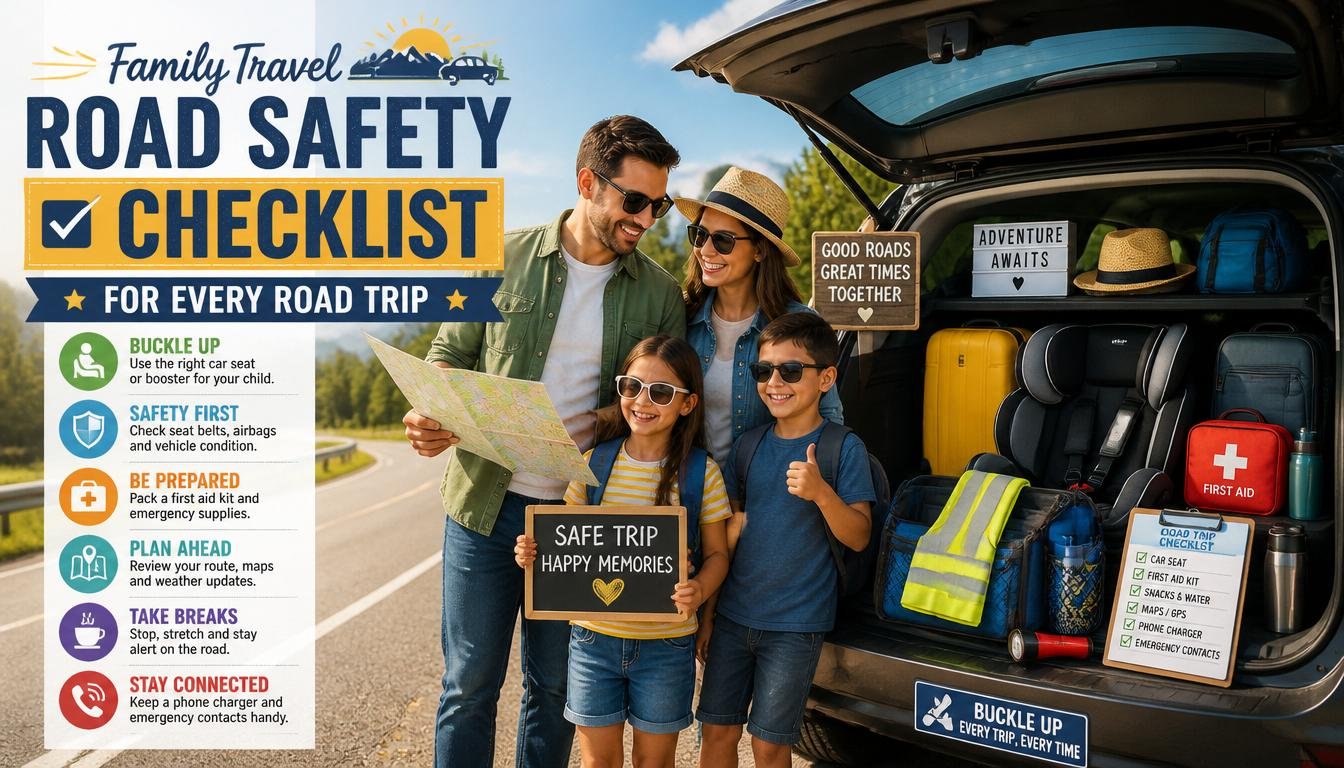
I once tried to drive my family across the country without doing a single safety check because I was in a massive hurry. Two hours into the trip, our left rear tire popped off completely and rolled past my window like a runaway loose regular wheel. My kids were screaming, my dog was barking at the runaway tire, and my wife was trying to save a melting chocolate ice cream cone from dripping onto her lap. We spent four hours on the side of a highway swatting giant bugs while waiting for a tow truck. That day, I learned that ignoring road safety does not save time. It just turns you into a highly stressed pedestrian on the side of a busy road. Now, I never start the engine without going through a strict safety list. Today, I am going to share my ultimate family travel road safety checklist so your next trip is full of happy memories instead of highway disasters.
Why Road Safety is Different with a Family:
When you travel by yourself, you can take risks. If your car breaks down, you can just sit on your suitcase and read a book for a few hours. But when you have a car full of children, a breakdown is a total nightmare. Kids get hungry, they get hot, they get bored, and they need to use the bathroom every single twenty minutes.
A road trip with a family means you are responsible for a whole moving ecosystem. You are the captain of a small ship. If the ship leaks, everyone sinks into bad moods and dangerous situations. Road safety is not just about avoiding big crashes. It is about preventing the small mechanical failures that ruin your vacation and put your loved ones in danger. When you take the time to prepare, you protect your family, your wallet, and your sanity.
The Essential Pre-Trip Vehicle Inspection:
Your car is the most important tool for a road trip. You must check its health before you place a single bag inside the trunk. Do this inspection three days before you leave. This gives you plenty of time to visit a mechanic if you find a serious problem.
Tire Health and Pressure Checks:
Your tires are the only part of the car that actually touches the physical road. If your tires are bad, your car cannot brake properly or turn safely.
First, you must check the tire pressure. You can find the correct pressure number on a small sticker inside the driver’s side door frame. Do not look at the number printed on the tire itself, because that is the maximum pressure, not the recommended pressure. Use a simple pressure gauge tool to check each tire when they are cold. Low pressure makes your car burn more fuel and can cause the tire to burst on a hot highway.
Second, check the tread depth. The tread is the groove pattern on the tire that grips the road. An easy way to check this is the coin test. Insert a small coin into the tire grooves. If you can see the top of the coin clearly, your tires are too smooth and dangerous. Smooth tires will slide around like ice skates when the road gets wet from heavy rain.
Third, never forget to check your spare tire. Many people spend hours checking their four main tires but leave their spare tire completely flat. If you get a flat tire on the highway and your spare tire is also flat, you are stuck. Make sure your spare tire has air and that you have a working jack and lug wrench to change it.
Checking Fluid Levels:
Your car engine relies on various liquids to stay cool and run smoothly. If these liquids run out, your engine will destroy itself within minutes.
- Engine Oil: Pull out the metal dipstick under the hood, wipe it clean with a rag, insert it fully, and pull it out again. The oil level must be between the two small dots or lines. Dark black oil means you need an oil change before your trip.
- Coolant Fluid: This liquid stops your engine from melting from extreme heat. Check the plastic see-through tank under the hood. Never open this cap when the engine is hot, because boiling liquid will spray out and burn your skin.
- Windshield Wiper Fluid: Driving into the afternoon sun with a dirty windshield is incredibly blinding and dangerous. Fill the wiper fluid tank to the top with a good cleaning liquid that can dissolve bugs and mud.
- Brake Fluid: This clear liquid transfers the power from your foot to the actual brakes. If this reservoir is low, take your car to a professional mechanic immediately.
Testing the Lighting Systems:
You need to see the road, and other drivers need to see you. Walk around your car while a family member sits inside and operates the controls.
Check the bright headlights, the bright high beams, the yellow turn signals, and the red hazard emergency lights. Pay special attention to the rear brake lights. If your brake lights are broken, a huge truck driving behind you will not know you are slowing down, which can cause a terrible rear-end crash. Clean the plastic lens covers on your lights with a soft cloth to make sure they shine as bright as possible.
Inside the Cabin Safety Standards:
Once the outside of the car is safe, you must turn your attention to the inside of the cabin. How you pack your passengers and your luggage matters just as much as your engine health.
Correct Car Seat Installation:
If you have small children, their safety seats must be installed perfectly. Studies show that over half of all car seats are installed incorrectly because the instructions can be very confusing.
Make sure the car seat does not move more than one inch when you pull it from side to side. Use your body weight to push down into the seat while you tighten the safety straps. If you are using a harness, do the simple pinch test. Try to pinch the fabric strap at the child’s shoulder. If you can pinch a fold of the strap, it is too loose. Tighten it until your fingers slide smoothly over the flat webbing fabric.
Also, remember that young children should stay in rear-facing car seats for as long as possible. Rear-facing seats protect a child’s delicate neck and spine during a sudden stop. Do not move them to a forward-facing seat just because their legs look a little long.
Securing Loose Cargo (The Missile Effect):
This is a danger that almost every family ignores. When you pack for a long road trip, you have loose items inside the car like heavy water bottles, hard books, tablet computers, and massive suitcases.
Imagine you are driving at sixty miles per hour and you suddenly have to slam on the brakes to avoid a deer. Every loose item inside the car will keep flying forward at sixty miles per hour. A heavy metal water bottle rolling around on the floor turns into a flying metal missile that can strike a child in the back of the head.
Keep the inside of the cabin clean. Store heavy luggage at the absolute bottom of the trunk. Use cargo nets or straps to tie down bags in the back of a sports utility vehicle. Put water bottles in the official cup holders. Store heavy books and tablets in the fabric pockets on the back of the front seats. Never stack bags higher than the back seat line, because they will fly forward during a sudden stop and block your rear view mirror.
Building the Ultimate Emergency Preparedness Kit:
You should always prepare for the absolute worst-case scenario. If you have a great emergency kit, a breakdown is just an annoying delay instead of a dangerous crisis. Keep this kit in an accessible spot, not buried under ten heavy suitcases.
The Medical First Aid Box:
Buy a sturdy plastic box and fill it with fresh medical supplies. Do not just grab an old box of bandages from your bathroom drawer. Your road trip first aid box needs to be ready for anything.
Your medical box should include:
- Various sizes of clean adhesive bandages for cuts.
- Sterile gauze pads and medical tape for larger wounds.
- Antiseptic wipes to clean dirt out of scrapes.
- A pair of sharp metal scissors and tweezers.
- Pain relief medicine for adults and liquid medicine for children.
- Allergy medicine and any specific prescription pills your family needs.
Mechanical Tools and Power Gear:
Cars are machines, and machines sometimes need adjustment. You do not need to bring a whole garage of tools, but a few key items will save your life.
Bring a strong set of jumper cables to revive a dead car battery. Learn how to connect them safely before you leave home. Bring a working flashlight with extra batteries. Store the batteries backward inside the flashlight so they do not accidentally drain while sitting in your glove box. Bring a roll of heavy-duty duct tape and some plastic zip ties. These can temporarily hold a loose plastic bumper or a broken mirror in place until you reach a repair shop.
Survival Supplies for the Family:
If you are stranded in a remote area without a mobile phone signal, you need to survive comfortably until help arrives.
Always carry one gallon of fresh plain water per person in the car. Keep a large box of non-perishable snacks like granola bars, dried fruit, and unsalted nuts. Bring a few light blankets, even if you are traveling during the hot summer. The desert and the mountains can get incredibly cold at night if your car engine dies and you cannot run the heater. Finally, pack a few bright reflective vests or emergency orange triangles. If you have to change a tire on a dark road, place the triangles fifty feet behind your car so oncoming traffic can see you from a safe distance.
Driver Wellness and Defensive Driving Tactics:
The most important safety feature in the entire car is the human brain operating the steering wheel. If the driver is tired, distracted, or angry, all the car safety features in the world cannot save you.
Managing Driver Fatigue:
Driving a car requires constant brain power. After a few hours of looking at a gray ribbon of highway, your brain gets tired. This is called highway hypnosis. Your eyes stay open, but your brain stops processing what it sees. This is just as dangerous as driving after drinking alcohol.
Have a strict rule to stop the car every two hours or every one hundred miles. Get out of the car, stretch your legs, and walk around a gas station for ten minutes. This pumps fresh oxygen back into your blood and wakes up your brain.
If you feel your eyelids getting heavy, do not try to be a hero. Do not just turn up the radio or open the window for cold air. Those tricks do not work. Pull over at a safe rest area and take a twenty-minute nap, or swap places with another adult driver. It is much better to arrive at your hotel two hours late than to never arrive at all.
Eliminating Digital Distractions:
A car traveling at sixty miles per hour moves eighty-eight feet every single second. If you look down at your phone for just three seconds to read a text message, you have driven the full length of a football field completely blind.
Put your mobile phone in a mount on the dashboard if you are using it for map navigation. Turn off all text notifications. Let your passenger manage the music playlist, look up restaurant stops, and reply to text messages for you. If you are driving alone, activate the do not disturb while driving mode on your phone. Nothing on that tiny screen is worth the life of your family.
Keeping a Safe Following Distance:
When you are excited to reach your holiday destination, it is easy to drive too close to the car in front of you. This is called tailgating, and it is a major cause of highway pile-ups.
Use the simple three-second rule. Watch the car ahead of you pass a stationary object like a tree or a signpost. Start counting slowly: one thousand one, one thousand two, one thousand three. If your front bumper passes that same tree before you finish counting, you are driving too close. Drop back until you have a safe three-second cushion. If the weather gets rainy or foggy, double that distance to six seconds, because wet roads make it much harder for your brakes to stop the heavy car.
Entertaining the Kids for a Safer Drive:
You might not think that children’s entertainment is a safety issue, but it absolutely is. A screaming child who is throwing a giant tantrum in the back seat is an incredibly dangerous distraction for the driver. You will look in the rearview mirror instead of looking at the road ahead.
Managing the Snack Supply:
Hungry kids are angry kids. I like to build a special snack box for each child before the trip starts.
Use a plastic storage container with small compartments. Fill each compartment with different healthy foods like whole grain crackers, apple slices, cheese cubes, and seedless grapes. Avoid high sugar foods like sweet candies and chocolate bars. Sugar makes children wild and hyperactive in the car. When the sugar rush fades, they will crash and cry. Healthy, crunchy snacks take longer to eat and keep their blood sugar completely steady.
Mess-Free Activities and Games:
Keep your kids busy with activities that do not make a giant mess inside the cabin.
Bring coloring books with special markers that only color on the special paper, not on your clean car seats. Audiobooks are a fantastic tool for family road trips. Download a fun adventure story that the entire family can listen to together through the car speakers. This keeps the kids quiet and focused on the story instead of fighting with each other.
You can also play classic car games that require zero equipment.
- The License Plate Game: Try to spot license plates from different states or provinces.
- The I Spy Game: One person describes an object outside, and everyone else guesses what it is.
- The 20 Questions Game: Think of an animal or object, and let the kids ask twenty yes or no questions to figure it out.
Comparing Driver Preparedness Levels:
To help you see where you stand, I made a clear table. It shows the massive difference between a driver who ignores safety rules and an expert driver who plans intentionally.
| Feature | The Autopilot Driver | The Safe Expert Driver |
| Tire Preparation | Ignores tires until one pops on the road | Check the pressure and tread depth before leaving |
| Packing Style | Pile bags high into the back seat area | Secures heavy luggage low down in the trunk |
| Phone Usage | Holds phone to read texts while steering | Places the phone in a mount or gives it to a passenger |
| Rest Stops | Drives eight hours straight without a single break | Stops every two hours to stretch and wake up the brain |
| Emergency Gear | Has an empty glove box and no tools | Carries a full first aid box, water, and tools |
| Car Seat Safety | Buckles the child into a loose, old car seat | Performs the pinch test to ensure straps are tight |
The Ultimate Departure Morning Checklist:
It is the morning of your big trip. The excitement is high, the kids are running around, and your brain is frantic. Use this quick sequence checklist right before you back out of your driveway to make sure you did not miss anything critical.
1. Perform a Final Walkaround:
Walk slowly around the outside of your car one last time. Look underneath the engine area to see if any dark oil or green coolant is leaking onto the pavement. Look at all four tires to ensure none of them look low or flat after packing the heavy luggage inside.
2. Check the Visibility Lines:
Sit in the driver’s seat and adjust all three mirrors. Ensure you can see clearly out the back window. If a large suitcase or a giant teddy bear is blocking your view, move it to the floor immediately. Clean your side windows if they are covered in morning dew or dirt.
3. Verify the Dashboard Status:
Turn on the engine and look closely at the dashboard display screens. Ensure your fuel tank is completely full. Check that no bright red or orange warning lights are glowing, like the check engine light or the tire pressure warning light.
4. Conduct the Seatbelt Audit:
Turn around and look at every passenger in the car. Ensure every adult has their seatbelt clicked across their shoulder and lap. Check that every child’s car seat harness is securely clipped at the armpit level. The car does not move an inch until every single person is locked in safely.
5. Secure the Cabin Air and Temperature:
Set the car climate control to a comfortable temperature before you start driving. A cabin that is too hot will make the driver sleepy and the kids cranky. A cool cabin keeps everyone alert and relaxed.
6. Set the Navigation Route:
Type your final destination address into your GPS or map application before you shift the car into drive. Let the route load completely so you know about any traffic delays or road construction zones ahead of time. This prevents you from fiddling with the screen while moving.
Embracing the Safe Road Trip Lifestyle:
A successful road trip is not measured by how fast you reach the destination. It is measured by the laughs you shared, the beautiful sights you saw, and the fact that everyone returned home safe and sound.
When you rush your preparation, you invite danger into your family vacation. Taking an hour to check your car oil, test your tires, and pack an emergency kit is the ultimate way to show love to your family. It gives you a wonderful feeling of confidence as you drive down the open road.
Do not let the pressure of a schedule make you make silly mistakes. Slow down, follow the checklist, and enjoy the journey. The road is waiting for you, and when you are prepared, it is a beautiful place to be. Pack your bags safely, buckle up tight, and have the most wonderful adventure with your beautiful family.
FAQs:
1. Where can I find the correct tire pressure for my family vehicle?
The correct tire pressure number is printed on a small white sticker located inside the driver’s side door frame.
2. What is the easiest way to test if my tire tread is safe?
Insert a small coin into the tire grooves to see if the rubber is thick enough to grip wet roads.
3. Why should I create a separate guest internet network for my device?
A guest network keeps your smart gadgets separate from your personal computer, so hackers cannot steal your bank details.
4. How often should a driver stop to rest during a family road trip?
You should stop the car every two hours or every one hundred miles to stretch and refresh your brain.
5. What is the pinch test for child car seat safety harnesses?
Try to pinch the fabric harness strap at the child’s shoulder to ensure it is tight enough to protect them.
6. Where should I pack the heaviest suitcases in my car trunk?
You must always pack the heaviest suitcases at the absolute bottom of the trunk to prevent them from flying.